
Wise Intuitive Experience With Practical Solutions! “Working with Savannah has been a rich and wonderful experience. She immediately grasps what is important and hones in on it, even things I might have written off or not paid attention to. Her experience and resources helped me navigate a particularly challenging situation quickly and easily, saving me a lot of time and stress. My view of what is possible has expanded to include parts of myself and my life that I had forgotten about or given up on, and now I have a plan for how to get there.”
Consistently transformative sessions! ”I first saw Savannah 3 years ago for about 5 months. I was a new mom and unhappy with my career decisions. Seeing her really helped to calm and ground me, and also to trust my own intuition about my next steps. I came back to see her recently and have found the same consistently transformative feedback and guidance. Seeing Savannah, I believe in the power of coaching to help me live the way I want to live my life. Every time, I feel more centered and confident about where I am going.”
You should really call Savannah today…”Savannah is simply the best. She listens with compassion, humor and intelligence, and helps you come to your own conclusions. She has a real gift for cutting through the confusion and extraneous information. You leave a session with incredible clarity and energy for moving forward. I can’t recommend her highly enough.”
Savannah is my champion! “Savannah is supportive in such an intuitive, nurturing and non-invasive way. Her consistent ways of checking in and sharing insight helps me to feel grounded and supported in trying out new ways of integrating with the world around me. I feel heard and seen and understood. I am thankful for her way of holding me accountable to living my authentic life.”
So blessed! ”I’ve known Savannah for over 14 years. She guided me back from postpartum depression after the birth of my daughter many years ago and recently I have sought life coaching from her. Empathetic, kind and intelligent – I feel “heard” and understood for the first time in years. Her metaphors, humor and guidance have lifted me from a place of old, toxic patterns. She is, without question, the most emotionally gifted and empathetic human I have been fortunate enough to have in my life.”
Best of both worlds!”Savannah is great! And so is her unique, custom tailored services in exploring new career avenues and exploring healing through her awesome body work. Highly recommended!!”
Welcome to 2023, everyone! I hope your holiday season was full of warmth, safety, and celebration. We’re here, on the other side of it, and with any luck, your life is allowing a little more time to focus on your personal well-being. In last month’s blog, I brought up the notion of mindfulness, and the way that [...]
We’ve all heard the word “mindfulness” so many times now, I have to wonder: does it hold any meaning anymore? It’s supposed to solve all of our problems, make our kids emotional geniuses, and turn us into powerhouses at work and in our relationships. Someone who is “mindful” looks great in yoga pants and spends most of [...]
Happy Spring Dear Ones! Are you feeling that sunshine lighting you up and giving you a little energy boost? Are the first blooms (here I see Trilliums on my almost daily walks at Powell Butte and various bulbs coming up in my yard) reminding you that after the dark of winter, what was sleeping can come awake [...]
A common way my life coaching clients (aka must of us humans) experience confusion is when we get caught in either/or scenarios. We try to stuff our complex emotions and needs into tidy boxes. We take sides and aren't able to hear all perspectives (inside ourselves or with others). Our fear keeps us from owning all of [...]

Have you heard the teaching tale of the of the two frogs who fell in the butter churn? One gave up, seeing no reason to fight, sank to the bottom and drowned. The other kicked and swam with all its might despite any obvious reasons to do so and the kicking motions turned the cream to butter, creating [...]

Most life and career coaching clients come to work with me focused on life purpose and self development. We all have unique, individual journeys that call us to look deeply within for wisdom, healing and the answer to the important question-- Who am I really? The more clear about who you are, the more you are able to find a [...]

Despite the busy drive of the holiday season, this winter dark is a time for rest and reflection. While humans hustle about, nature and her creatures curl up and let go of unnecessary work. And when we resist our primal instinct to slow down, we create stress and disconnection for ourselves. I encourage us all to find some [...]
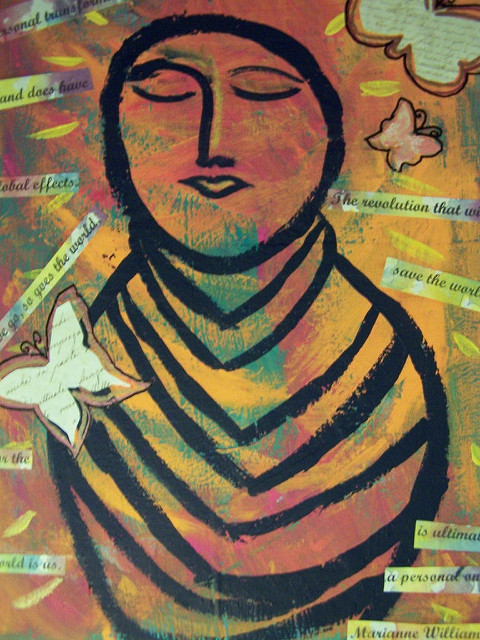
If you are a woman who has a hard time saying no, you often feel overcommitted or overwhelmed and have lost track of your own needs, please read this blog post! If you are so blessed to have none of those issues, please skip the blog post but leave your advice in the comments! Recently one of my life coaching clients started [...]
This deep, dark time of year, especially in Portland Oregon, many of my life coaching clients are saying things like: I feel more tired; why can't I get it all done; I just want to curl up on my couch; I don't really want to go to that work event... At the same time, I watch my [...]

This week is a good time to remember the scientifically proven benefits of gratitude! One of the reasons clients come to life coaching is their desire to focus on what is already working well, to build on their resources and strengths and to shift into a more creative mindset. Photo by Kathryn, shared via Flickr [...]
Have you heard the story of the two monks and the heavy load? It is Zen tale passed down for centuries in Buddhist teachings. One day two traveling monks reached a town and saw a young woman waiting to step out of her sedan chair. There were deep, muddy puddles and she couldn’t step across without getting [...]
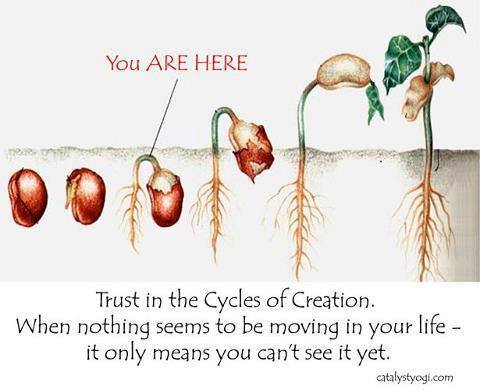
Do you ever find yourself fooled into believing that answers should come to you right away? In this convenience and consumer oriented culture with the world right at our fingertips, we are easily tricked into believing life works like this: You want something. You find it. You get it. But, through my life and career coaching practice [...]
One of the things that I love best about life coaching is the way the inquiry process shines the light of awareness into our habits, shadowed feelings and needs and distorted ways of thinking. I came across this very helpful list of the different ways our brains distort our reality. Here is my own interpretation of each [...]
When you are in a change or decision-making process, it's easy to get caught up in a state of urgency and feel driven to "figure it out NOW." Your nervous system goes on high alert and you might even lay awake at night worrying and planning. Your body tightens, your thinking narrows and your Research shows that [...]

Many clients come to life coaching hoping to break a painful, restrictive cycle in their lives. The context is varied, from relationships to career to personal habits, but the problem is often the same. They are stuck on a repeat cycle that says something like: "I always attract people into my life who are unavailable...I can't ever [...]