Savannah Mayfield, LMT, CEC
Certified Life Coach
Licensed Massage Therapist
ph: 503.473.4754
savannah@nurturelifecoaching.com

Archive for the 'self-limiting beliefs' tag

Happy New Year!

The Best Faces on Flickr 03/2006

By Zohar Manor-Abel, shared via Flickr

To begin 2012, I have a simple question for you: Who do you want to be this year?

You, like everyone else I have met through my life coaching practice, have many different selves inside. You might have a worried self that tends to agonize about money and a jaded self that feels skeptical about getting too close to people and a hopeful self that wants to have an impact on the world…and many other selves that have conflicting feelings.

The themes might be different for each of us, but the truth is clear: moment to moment, we can choose who to be.

Every action you take and attitude you hold comes from some version of your self. So, change who you are being…and you truly change your life.

The very first step is to be mindful (pay compassionate attention) to who you are being. You might ask yourself: How do I feel right now? What does this version of myself believe? What else feels true?

If you would like to explore this more, I invite you to join my next Self Nurture Women’s Group. We will practice important skills like: mindfulness, self-compassion, connecting to inner knowing and more!

No Comments »

Self-compassion is a key to happiness

By Leo Reynolds via Flickr

In my life coaching work with women, I am regularly faced with the honor and challenge of helping clients mitigate the negative impacts of perfectionism.

One of my primary tools for working with clients who are highly self-critical is self-compassion.

An article this week on MSNBC describes recent research showing self-compassion to be much more important to resilience and personal happiness than self-esteem. I see this every day in my office when a client finally, often after years of listening to the internal critical voice, begins to hear a more compassionate ally within.

The cultural focus on self-esteem has misdirected parents to either over-praise kids or push them relentlessly towards performance. According to the article,  “But now scientists are realizing they may have been measuring the wrong thing; all the benefits of having high self-esteem are equally found among the self-compassionate, said psychologist Mark Leary, a researcher at Duke University. And when statistically looking at self-compassion alone, the negative aspects of high self-esteem, such as narcissism, disappear.”

The depression, anxiety and stress of perfectionism also lessen or disappear when self-compassion is practiced.

Kristin Neff, associate Professor at the University of Texas at Austin (my alma mater)  is spearheading research on self-compassion. Her book, “Self Compassion, Stop Beating Yourself Up and Leave Insecurity Behind” was published this Spring.

Neff defines self-compassion through three aspects: mindfulness, common humanity and kindness.

In my practice, I regularly use mindfulness with clients to help them pay careful attention to their own thoughts, feelings and body sensations. This creates an ability to self-reflect and be more present and takes them out of automatic critical mode.

My understanding of common humanity is simple this: we are all connected and none of us is alone in experiencing difficulty. Normalizing common feelings can be hugely helpful in inspiring self-compassion. It also increases a sense of personal courage to know that other people have similar feelings and experiences.

And kindness is an attitude that must be directed both inwardly and outwardly. The true measure of compassion is not the ability to be kind to others, but the ability to be kind to oneself. And the research is showing this to be absolutely true.

Researcher Mark Leary says,”Self-compassion begins to sound like you are indulging yourself, but we don’t find that. People high in self-compassion tend to have higher standards, work harder and take more personal responsibility for their actions.”

1 Comment »

Some inspiration for you!

I had the privilege of being interviewed by fellow Life Coach Amy Pearson this week! Please listen to this short interview on self-nurture! I know that you will be inspired by the idea of making self-care more simple and reasonable in your life!

Also, I have a new coaching column in Portland Woman Magazine! “Get a life (coach)!” will be featured in every issue, with insights to guide you in your every day life. You can pick it up free in various locations in Portland, Oregon (like the library or grocery store) or read it on-line. Just follow the link and flip to page 27.

I was also delighted to write a feature story about Andrea Moore, the winner of the Mama Makeover contest for Portland Family Magazine. You can also pick that up free in Portland, Oregon or read it on-line on page 12. Her story is so inspiring, you don’t want to miss it!

No Comments »

Are you stuck in the perfection trap?

Many of my clients suffer from what I call the “perfection trap.” This sneaky pit is easy to fall into when you are trying too hard to do everything just right. When you over-worry about failure or looking bad, you back yourself right into the devious clutches of “it’s never good enough” – and never done.

What is the easiest way to fall into it the perfection trap? By comparing yourself to someone else.

The biggest problem with the perfection trap is that it is difficult to escape. Some people live their whole lives inside of it. From the inside, it seems that everything is more difficult and personal connections are complicated. There is a vague sense of longing for more ease, more passion, but the harder you claw your way towards it from inside the trap, the further away it seems.

The world outside the perfection trap is messier. There is more space for error and exploration…and creativity!  Your relationships are more authentic because people can come closer to you.  You are willing to try and learn new things – and even fail – creating more possibility in your life.

How do you escape this tricky trap?

Accept yourself right now, just as you are and be willing to grow. Your imperfections make you who you are instead of a photocopy of an unachievable ideal. Everything you have been through, every sag and scar, your disappointments, quirks and fears, all tell an important story about your experience during your lifetime.

Your true nature shines through only when you are willing to stand in the open.

I have a gift for you: There is nothing wrong with you.  You might have some problems, but that is a natural part of being human.  How you learn and grow from your challenges, rather than hide in the shade of perfection, is the beauty of you.

“Ring the bells that still can ring, forget your perfect offering, there is a crack in everything, that’s how the light gets in.”— Leonard Cohen

No Comments »

Stressed, busy parent? You need self nurture!

Last week I had the pleasure of being interviewed on Single and Unplugged, an internet radio show dedicated to supporting and inspiring single parents. My topic was self nurture: how to tend to yourself when time and money are often limited. It was a great show and I think the information and insights are relevant to any busy parent, single or partnered. Please listen and share with your friends!

No Comments »

New research: You can rewire your brain!

I see it every week: A woman comes into my office with a vague sense of discontent. Her life is going fairly well but something is… missing. She considers changing careers, worries about the longevity of her intimate relationship and is struggling to take better care of herself.

She often feels “stuck,” but is not sure why.

She thinks she is coming to see me for support in rearranging her external life: accomplishing her goals, making a plan for a new career or venture and  getting some accountability for changes in diet and exercise.

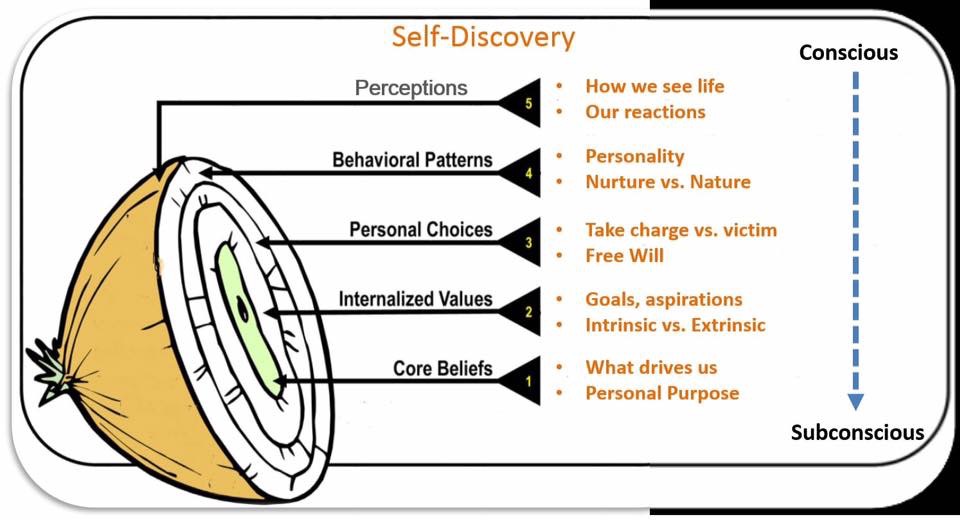
As we work together, she discovers some core thoughts and beliefs that lead directly to her feelings of dissatisfaction. Before she changes jobs or leaves her husband, she needs to change her thinking.

New research backs up a basic principle of coaching: Changing your thinking patterns literally leads to changes in the brain, positively impacting emotional health.

Time Magazine’s recent article, “How The Brain Rewires Itself,” looks at several studies on the amazing “neuroplasticity,” the ability to change structure and function based on experience in the human adult brain.

“The brain can change as a result of the thoughts we think, as with Pascual-Leone’s virtual piano players. This has important implications for health: something as seemingly insubstantial as a thought can affect the very stuff of the brain, altering neuronal connections in a way that can treat mental illness or, perhaps, lead to a greater capacity for empathy and compassion. It may even dial up the supposedly immovable happiness set point.”

Most of my clients find that once they shift their thinking, their external reality changes as well.

But, it happens more naturally and easily in response to the inner changes. After they “change their minds,” they typically have a greater sense of clarity about what they really want!

2 Comments »

Transform your self-limiting beliefs: Part II

Did you do the self-limiting beliefs exercise in Part I? If so, what did you learn about the thoughts that limit you and keep you stuck?

The good news is that these thoughts are in your mind and you are the one that gives them power and meaning! That means… you can change them! As a matter of fact, you are the only one who can!

How?

Through a powerful process of inquiry that doesn’t just work with your conscious mind, it allows your deeper consciousness to participate as well.

Step 1: Identify the thought or belief. A common one that comes up with women is: “Taking care of myself is selfish.”

Step 2: Ask yourself: How does this thought/belief make me feel? Thinking that taking care of yourself is selfish is likely to make you feel resentful, tired and cranky. Every time you have an opportunity to rest or nurture yourself, your mind tells you that you should be productive or that someone else needs your attention. If you follow that self-limiting thought, you are going to burn yourself out and not be very fun to be around!

Step 3: Consider:  Where did this thought/belief come from? Perhaps you had selfless female role models who never took time for themselves (and maybe made others pay for it later). You might get this idea from cultural beliefs about the way women or mothers should act. Maybe you have a deep feeling of unworthiness that says that you have not earned or do not deserve to take care of yourself. Often women come to the deeper self-limiting belief that says: “I am not worth taking care of.”

Step 4: Be curious: Is this thought/belief 100% true? Does self-care automatically equate selfishness? Most women that I know who are worried about being selfish are the ones who are so committed to their families, work or community that they give and give and give… Selfishness is being so concerned with yourself that you never think of or care for the needs of others. True self-care is simply being in balance: caring for yourself and others!

Step 5: Shift it!  If the self-limiting thought is not true, what would be a more honest thought/belief that also reflects your values? Of course you want to care for others and you truly need to take care of yourself so that you have love and attention to share. A new thought might be: When I take care of myself, I have more to give to the people and activities in my life!

Step 6: Take action!  What can I do that reflects my new thought/belief? Self-limiting thinking is addictive and we have formed habits that correspond with these thoughts. In order to truly change them, you have to be willing to form new habits. If you are committed to taking better care of yourself so you have more to share with those you love, you might finally listen to your body and start going to yoga. Maybe you are going to let something go that you have been doing out of obligation. Or perhaps you will take some time each week to paint, dance or practice your favorite musical instrument. Chose something that nourishes you!

Transforming self-limiting thinking will change your life and relationships. And,  you are doing it as much for those you love as for yourself.  When you are not willing to buy into limiting thoughts, you inspire those around you to question their own. If you are a parent, you will be teaching your children to think more positively.

Leave a comment and share what self-limiting thought/belief you are shifting!

2 Comments »

Transform your self-limiting beliefs, Part I

As a client was leaving my office last week, she turned to me and said: “Savannah, you are a brain organizer.” I looked puzzled for a minute and then laughed when she said, “My thoughts are so clear right now!”

As a Life Coach for women, a big part of my job is supporting clients in uncovering the truth that hides beneath their limiting thoughts about themselves and their lives. Like a professional organizer who comes in and helps you see beneath the piles and stacks to the essence of what you really want to have in your space, I guide my clients to do the same within themselves.

We all have regularly occurring thoughts that block our progress and growth, that tell us lies about our self-worth and that sabotage our relationships. Some are fairly obvious and we only half-believe them. Other thoughts are woven into our consciousness so deeply that we don’t even know they are limiting us.

The first step to freedom from limiting thoughts and beliefs is to become aware of them. For the more obvious ones, this is fairly simple and you probably already question them regularly. “No one likes me” might come to the surface when you are feeling low, but you don’t really believe it most of the time.

But the deeper limiting beliefs can be more difficult to uncover.

Once you understand the common qualities of a self-limiting thought/belief, you will be able to identify and shift them.

1. Limiting thoughts and beliefs are usually based in fear. They often have common themes like: fear of abandonment (I need to make other people happy so they will stick around); fear of deprivation (You should work hard (at a job you hate) or you will end up in the streets); fear of failure (I have to be productive all the time or things will fall apart).

2. They tell us who we have to be in order to be loved and accepted. “If I am my authentic self, no one will really like me.” These thoughts tell you that you are not accepted or acceptable just as you are.

3. They block your progress and keep you stuck. Whenever you are feeling stuck or un-happy, you can bet a self-limiting belief is operating. People are often afraid to take a risk and try something that would be really fulfilling for them because of a limiting belief like: “Things never turn out to be as good as you want.”

Ready to discover some of your self-limiting beliefs? Try the following exercise:

Take some time in a quiet place and contemplate each phrase. Allow your mind to quickly react to each one and take note of what comes to you. Move on to the next phrase only when you feel complete.

I am…

I am not…

Women are…

Men are…

I am good with…

I am not good with…

I will never be able to…

I don’t deserve…

My family…

I always…

I never…

I should…

I have to…

Money is…

Now go through your list and circle the ones that feel self-limiting or that hold you back in life.

Check back next week for Part II where I share an important process for transforming these limiting thoughts.

6 Comments »

Caught in the “Flux”

I am reading a very thought-provoking book right now. Flux: Women on Sex, Work, Love, Kids, and Life in a Half-Changed World by Peggy Orenstein is based on 200 interviews with women between the ages of 20 and 45 about the choices that they are making in a world only half changed by feminism.

While these women have so many more opportunities than women did three decades ago, they are still very conflicted when it comes to navigating the myriad of decisions around career and family life.

When to get married and have kids, how to move forward in their careers while making time for their families, how to “share” household and child care with busy working husbands…or even not to have kids and just focus on career. And some moms decide to stay home with young children but feel left behind and misunderstood by a world focused on achievement.

One issue with this book is that it only focuses on a small sub-culture: white, highly educated, heterosexual, middle to upper class women. The other thing that was missing for me was an exploration of the bigger picture. Why is our culture so focused on achievement and money at all costs? What would change if feminine power was acknowledged instead of women being expected to operate the same way a man would? Would our world be kinder and less violent?

Flux is a fascinating read because it offers intimate glimpses into the women’s lives and stories. Orenstein doesn’t try to come up with any solutions, but does suggest that equality would be better served by men taking on more child-raising and household tasks and work environments being more family-friendly.

I know that there isn’t one way that will work for every woman and her family. I have found that when we listen deeply to our hearts and inner wisdom (rather than what society tells us we should be doing) we will always find the answer.

How do you make choices in your own life around career and family?

1 Comment »

Self Nurture Challenge, Day Four: The Monkey Mind

Do you have a busy mind? Do you feel more comfortable being productive, “getting things done” and being in motion? Do you tend to over-think or make assumptions?

If so, you are a lot like me! I have always struggled with the delicate balance between doing and being. Because I write a blog about mindfulness in mothering, you might assume that I am a master of meditation and mindfulness.

WRONG!

I am the one who needs every single one of my own reminders. I write this blog for myself more than anyone!

Yes, I have taught yoga, given over 500 massages, gone on Vipassana Retreats, led hundreds of meditation and mindfulness exercises. I even offer body-centered coaching to help my clients calm their minds and connect with their bodies.

And still, I am learning. For me, it is a daily practice.

In Buddhism, this busy mind is called the monkey mind. Imagine a room, full of screeching monkeys! It is restless and unsettled, never content in the present moment. It creates anxiety, feelings of dissatisfaction and distraction. The monkey mind will always have you doubt yourself.

My Self Nurture practice today was to focus my thoughts on being present in the moment.

Did you know that we have an average of 60.000 thoughts per day? And many of those thoughts are fears about something that might (or might not) happen, assumptions about what other people think about us and self-limiting beliefs. No wonder we get so stressed!

So today when my mind wandered away from focusing on present time, I gently nudged it back. When I remembered…Because you know how quickly the monkey mind takes over!

Here are three questions that inspire present-time thinking:

1. What am I feeling (emotions and sensations) right now?

2. Where is my attention?

3. What do I need to be more present in this moment? Sometimes it is simple like a glass of water or a deep breath. Other times it is more complex, like completing a task that is distracting me or talking about something this is bothering me.

Being present is an empowering and nurturing practice. Only in present time can I really enjoy my life, connect with my loved ones and take actions that make a difference in my health and well-being.

How are you nurturing yourself today?

No Comments »

Next »

5515 NE 30th Portland, OR 97211 | 503.473.4754
web development by amy garrett design | copyright nurture life coaching 2011